






Key Takeaways
-
Cotton is the best everyday summer fabric for kids ethnic wear — it breathes well, washes easily, and keeps little ones cool during long celebrations.
-
Silk looks stunning but traps heat, so save it for short evening events or air-conditioned venues, not all-day wear.
-
Net is purely decorative — always layered over cotton or silk, never worn directly against a child's skin.
-
For summer weddings and daytime functions, cotton-silk blends give you the best of both worlds: comfort plus a festive finish.
-
Toddlers and infants need 100% cotton — no exceptions, regardless of how beautiful the outfit looks.
Every summer, parents face the same dilemma: your child has a wedding, a naming ceremony, or a family function coming up, and you want them to look dressed up without melting in the heat. The outfit sitting in your cart looks gorgeous, but you have no idea what the fabric actually feels like on a sweaty six-year-old running around a wedding lawn in May.
Fabric choice in kids ethnic wear is not a styling decision — it is a comfort decision. Children have more sensitive skin than adults. They sweat more, they move more, and they absolutely will not stand still for a three-hour function if their outfit is scratchy, stiff, or suffocating.
This guide breaks down the three most common fabrics used in kids ethnic wear — cotton, silk, and net — and tells you exactly when to use each one, when to avoid them, and what to look for when you are shopping this summer. No guesswork, no vague advice.
Understanding Fabric Basics Before You Buy
Before comparing fabrics, it helps to understand what you are actually looking for in summer ethnic wear for kids.
The key factors are: breathability (how easily air moves through the fabric), weight (how heavy it sits on the body), skin-friendliness (how it feels against sensitive or sweat-prone skin), and washability (because kids will inevitably eat something at the function).
No single fabric wins on all four counts. That is why the best kids ethnic wear brands layer and blend fabrics thoughtfully rather than making outfits from one fabric alone.
Cotton: The Summer Workhorse
Cotton is the most practical fabric you can choose for kids ethnic wear in summer — and there is a clear reason it is the go-to for daytime functions, outdoor events, and anything involving children under eight.
Why cotton works:
Pure cotton is breathable. It absorbs sweat, allows air circulation, and does not cling to the body the way synthetic fabrics do. For a child attending a summer function that runs from afternoon into evening, cotton keeps them comfortable across the entire duration without causing heat rashes or skin irritation.
It is also easy to wash. Cotton can take a normal machine wash cycle, which matters when your child drops mithai on their kurta five minutes into the function.
What cotton works best for:
Cotton is ideal for kurta pyjama for boys, girls kurta sets, palazzo sets, and casual lehengas meant for daytime wear. At Pspeaches, several summer collections use pure cotton or cotton-blend fabrics specifically to keep kids comfortable through warmer months.
Where cotton falls short:
Plain cotton does not have the sheen or weight that makes an outfit look "dressed up" for a formal occasion like a wedding. It can also wrinkle easily, so if your child is sitting in a car for an hour before the event, their outfit may look creased by the time they arrive.
Best for: Daytime functions, outdoor events, summer festivals, kids under 5, everyday ethnic wear.
Must Read: Top 10 Kids Ethnic Wear Brands in India — and what fabrics they actually use
Silk: The Festive Fabric With a Catch
Silk is what parents reach for when the occasion is a wedding or a big family celebration. It has a natural sheen, it drapes beautifully, and it photographs extremely well. A lehenga for girls in silk or a silk-blend fabric looks effortlessly festive without needing heavy embellishments.
Why silk works:
Pure silk is actually a natural fibre, which means it is more breathable than polyester or synthetic satin. It regulates temperature reasonably well and does not produce the same static cling as artificial fabrics. The lustre and drape make ethnic silhouettes look polished and occasion-appropriate.
What silk works best for:
Silk or silk-blend fabrics are a good choice for evening functions, indoor celebrations with air conditioning, or events that are shorter in duration. A sharara for girls in a light silk blend or a silk kurta for boys can look elegant without being uncomfortable — as long as the event is not a five-hour outdoor affair in peak summer.
Where silk falls short:
This is the important part. Pure silk traps body heat. In outdoor summer events or humid weather, a child wearing a full silk outfit will be sweaty and uncomfortable within an hour. Silk also requires dry cleaning or hand washing, which adds to the cost and effort of maintaining the outfit.
Additionally, heavily woven silk like Banarasi can be quite stiff and heavy — not appropriate for toddlers or young children who need to move freely.
What to look for instead: Cotton-silk blends. These fabrics carry the sheen and festive quality of silk while adding the breathability of cotton. Many quality ethnic wear pieces for kids now use this blend specifically for summer collections.
Best for: Evening weddings, indoor AC venues, formal functions under 2-3 hours, children above 5 years.
Net: Decorative, Not Functional
Net is not a base fabric — it is a layering fabric. If you see net in a kids ethnic wear outfit, it is always used on top of something else: a cotton lining, a silk base, or a georgette underskirt. Net on its own has no place directly against a child's skin.
Why net is used:
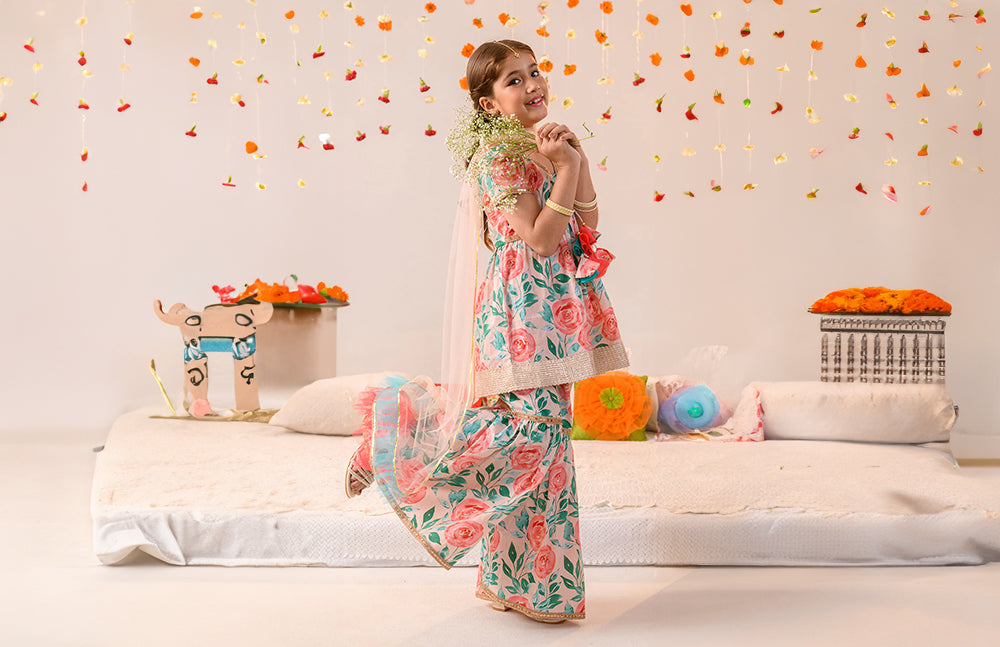
Net adds volume, texture, and a fairy-tale quality to lehengas, dupattas, and gown-style ethnic dresses. A multi-layered net skirt gives a lehenga that full, swirly look that children love. It catches embellishments well — sequins, zari work, and thread embroidery sit beautifully on net fabric.
Where net falls short:
Net can be scratchy. The edges of net fabric, especially on cheaper pieces, can cause skin irritation if they rub against the arms, neck, or legs directly. In summer heat, a thick net overlay can make an outfit feel significantly heavier and warmer than it looks.
For children with sensitive skin or for infants, net-heavy outfits should be avoided entirely — or at minimum, checked carefully for a soft, well-finished lining underneath.
What to look for: A fully cotton-lined inner layer under any net garment. The lining is what your child actually feels. If the lining is thin, synthetic, or absent, the outfit is not worth buying regardless of how beautiful it looks.
Best for: Special occasion lehengas and gowns for older girls (6+), where a cotton or georgette lining is confirmed.
Also Check: Best Navratri Outfits for Girls — how to dress for long festive evenings
Cotton vs Silk vs Net: Quick Comparison
| Feature | Cotton | Silk / Silk Blend | Net |
|---|---|---|---|
| Breathability | Excellent | Moderate | Low (depends on lining) |
| Summer suitability | Best | Fair (blends better) | Avoid as base |
| Skin-friendliness | Excellent | Good | Can irritate |
| Washability | Easy (machine wash) | Careful handwash | Delicate |
| Festive look | Moderate | High | High (decorative) |
| Best age group | All ages | 5 years and above | 6 years and above |
| Best occasion | Daytime, outdoor | Indoor, evening | Special occasion only |
Fabric-Wise Outfit Guide for Summer Functions
Here is a simple way to think about it based on what your child is attending:
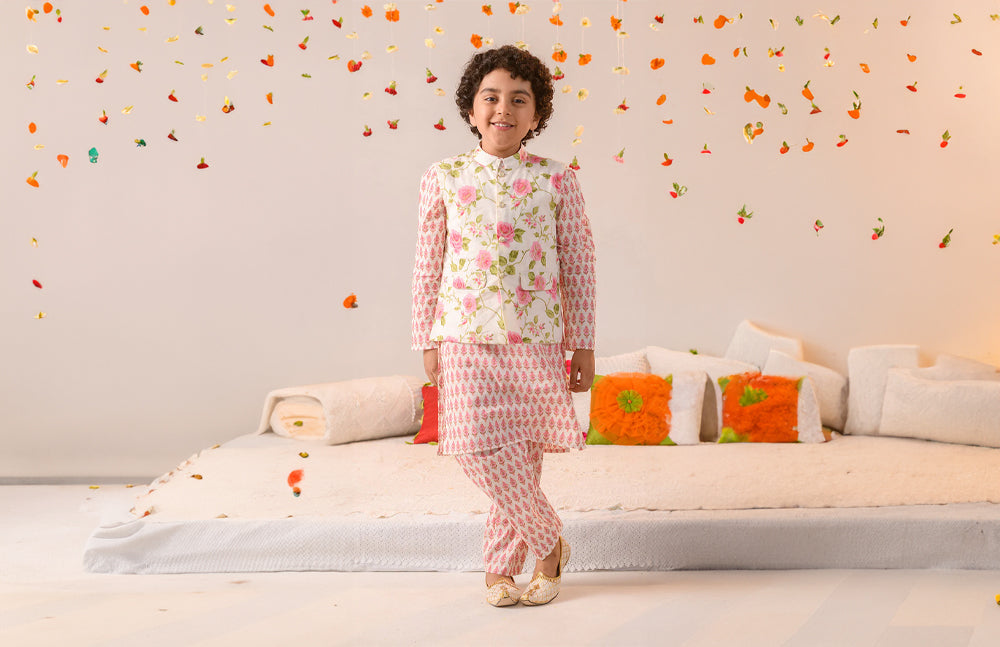
Summer wedding (outdoor, afternoon): Go for a cotton or cotton-silk blend. A pure cotton girls ethnic wear kurta set or a lightweight cotton lehenga will keep your daughter comfortable through mehendi and lunch functions. For boys, a printed cotton kurta pyjama for boys with a Nehru jacket looks festive without the discomfort.
Summer wedding (indoor, evening): A silk-blend lehenga for girls or a sharara for girls in georgette is appropriate here. The controlled environment makes the extra heat manageable for a few hours.
School cultural programme or festive day: Pure cotton is the only sensible choice. Schools are often crowded and warm, and children need to move freely. A simple cotton girls kurta set or boys kurta in a festive colour works well.
Birthday party or naming ceremony (home/venue): Cotton-blend or lightweight georgette. Net-heavy outfits are not practical when children will be eating, running, and sitting on the floor.
What About Georgette, Rayon, and Other Common Fabrics?
A few other fabrics come up regularly in kids ethnic wear collections and are worth a quick mention.
Georgette is a lightweight, slightly sheer fabric that drapes well and stays cooler than heavy silk. It is a solid choice for summer evening wear and is often used in dupattas and overlayers. It works well in girls ethnic wear collections as a middle-ground option between cotton and silk.
Rayon is soft and lightweight, making it comfortable for summer. However, it does not hold embroidery or embellishments as well as cotton or silk, so it is more common in everyday kurta sets than in festive wear.
Chanderi is a thin, semi-transparent handloom fabric that is popular for summer ethnic wear in India. It is breathable, has a natural sheen, and is much lighter than silk. A Chanderi kurta set is an elegant choice for summer functions and is gentle enough for most children's skin.
Also Check: How to choose the right kids ethnic wear for every occasion — a parent's guide
Tips for Buying Kids Ethnic Wear by Fabric This Summer
1. Always check the lining. Any embellished or net-layered outfit must have a soft, well-finished inner lining. Pull the outer fabric apart and feel what is underneath — that is what your child wears.
2. Buy one size up. Ethnic wear often runs slightly fitted. A slightly larger size allows better air circulation and more comfortable movement.
3. Pre-wash before the event. Cotton ethnic wear softens after the first wash. Wash it once before the occasion so there is no stiffness or residual dye on the day.
4. Avoid heavily embellished necklines for toddlers. Zari borders and bead work near the collar area can scratch a young child's neck during a long event.
5. Check care instructions before buying. If an outfit requires dry cleaning only and your child is under 4, reconsider. Accidents happen at functions.
Conclusion
For summer, cotton wins as the most practical base fabric for kids ethnic wear — breathable, washable, and gentle on sensitive skin. Silk and silk blends are best reserved for shorter evening events in controlled environments. Net adds beauty but needs a proper lining underneath to be wearable for a child. The smartest approach is to look at the whole outfit — not just the outer fabric — and consider the specific event, duration, and your child's age before deciding.
Good ethnic wear for kids does not make a compromise between how an outfit looks and how a child feels in it. When you shop with fabric in mind, you give your child both.
Frequently Asked Questions
1. Which fabric is best for kids ethnic wear in summer?
Cotton is the best fabric for kids ethnic wear in summer because it is breathable, absorbs sweat, and does not irritate sensitive skin. For festive occasions, cotton-silk blends offer a balance of comfort and festive appearance.
2. Is silk safe for toddlers and infants?
Pure silk is not recommended for toddlers and infants in summer. It can trap heat and cause discomfort during long events. Stick to 100% cotton for children under 3, especially for outdoor or daytime functions.
3. Can kids wear net fabric in summer?
Net can be used in summer ethnic wear only when it has a soft, full cotton lining underneath. Net should never sit directly against a child's skin, as it can cause irritation, especially in warm weather.
4. What fabric should I choose for a lehenga for girls in summer?
For summer daytime events, choose a cotton or Chanderi lehenga. For evening indoor weddings, a light silk-blend or georgette lehenga works well. Avoid heavily embellished pure silk lehengas for outdoor or full-day functions.
5. What is the best fabric for a kurta pyjama for boys in summer?
Pure cotton or cotton-blend kurta pyjama sets are the best choice for boys in summer. They are comfortable, easy to move in, and can be machine washed after the event.
6. How do I know if an ethnic wear outfit has good lining?
Gently pull apart the outer embellished layer and check what is underneath. A good lining should be soft to the touch, cover the full inner surface, and feel like it could sit against the skin without causing irritation.
Explore Pspeaches' summer kids ethnic wear collection — thoughtfully made in breathable fabrics for comfortable celebrations.