






Key Takeaways
-
Always measure your child fresh before ordering ethnic wear as sizes vary significantly by brand.
-
Chest and height are the two most reliable measurements for a kids kurta size chart.
-
For lehenga for girls and sharara set for girls, waist and hip measurements matter as much as age.
-
Infant ethnic wear requires height and weight checks, not just age-based sizing.
-
When in doubt between two sizes, size up since layered ethnic fabrics need room to move.
Buying kids ethnic wear online should be exciting, not stressful. But nothing kills the joy faster than ordering a stunning lehenga choli only to find it too tight around the chest, or a kurta that swims past your child's knees. The truth is, ethnic wear fits very differently from regular western clothing, and age-based sizing alone is unreliable.
This guide walks you through exactly how to measure kids for ethnic wear, how to read a kids kurta size chart, and what to look for across different outfit categories. Whether you are shopping for a festival, a wedding, or a family celebration, getting the size right the first time saves time, returns, and last-minute panic.
Why Ethnic Wear Sizing is Different from Regular Kids Clothing
Standard kids clothes follow predictable cuts: t-shirts are stretchy, jeans have elasticated waists, and there is very little variation between brands. Kids ethnic wear is built differently. Kurtas often have structured necklines and set-in sleeves. Lehenga cholis come with fitted blouses. Sharara set for girls features flowing skirts that need proper hip clearance. Dhoti sets involve pleating and draping that require the right waist fit.
Age-based labels like "4-5Y" or "6-7Y" are a starting point, not a guarantee. Two children the same age can have chest measurements that differ by 5 to 8 cm. That gap translates directly into whether an outfit fits well or not. This is why learning how to measure kids for ethnic wear properly is the single most useful thing you can do before placing an order.
How to Measure Your Child for Ethnic Wear
You need a soft measuring tape, a cooperative child, and about five minutes. Take measurements over light innerwear, not over thick clothes. Keep the tape snug but not tight.
Height: Stand your child against a wall without shoes. Mark the top of their head and measure from the floor to the mark. Height is primarily used to check kurta length and lehenga fall.
Chest: Wrap the tape around the fullest part of the chest, just under the arms. Keep it parallel to the ground. This measurement is critical for kurta tops and blouse fits in lehenga for girls.
Waist: Measure around the natural waist, which sits just above the belly button. For boys kurta pajama sets and sharara set for girls, this is a key fit point. Do not suck in or push out the stomach.
Hip: Measure around the widest part of the hips and seat. For girls in lehengas and shararas, this is often the deciding measurement between two sizes. Take this one carefully.
Write all four measurements down before checking any size chart. Do not rely on memory.
Kids Ethnic Wear Size Chart
Use this reference chart to find the right size based on your child's measurements. When measurements fall between two sizes, always choose the larger size for ethnic wear.
|
Age |
Height (cm) |
Chest (cm) |
Waist (cm) |
Hip (cm) |
Size |
|
1–2 yrs |
80–92 |
50–52 |
48–50 |
52–54 |
1–2Y |
|
2–3 yrs |
92–98 |
52–54 |
50–52 |
54–56 |
2–3Y |
|
3–4 yrs |
98–104 |
54–56 |
52–54 |
56–58 |
3–4Y |
|
4–5 yrs |
104–110 |
56–58 |
54–56 |
58–62 |
4–5Y |
|
5–6 yrs |
110–116 |
58–61 |
55–57 |
62–66 |
5–6Y |
|
6–7 yrs |
116–122 |
61–64 |
57–59 |
66–70 |
6–7Y |
|
7–8 yrs |
122–128 |
64–67 |
59–61 |
70–74 |
7–8Y |
|
8–10 yrs |
128–138 |
67–72 |
61–64 |
74–80 |
8–10Y |
|
10–12 yrs |
138–148 |
72–77 |
64–67 |
80–86 |
10–12Y |
Note: Always cross-check with the specific size guide on each Pspeaches product page, as fit can vary slightly by style and fabric.
Fit Tips for Each Type of Kids Ethnic Outfit
Boys Kurta Sets and Dhoti Sets
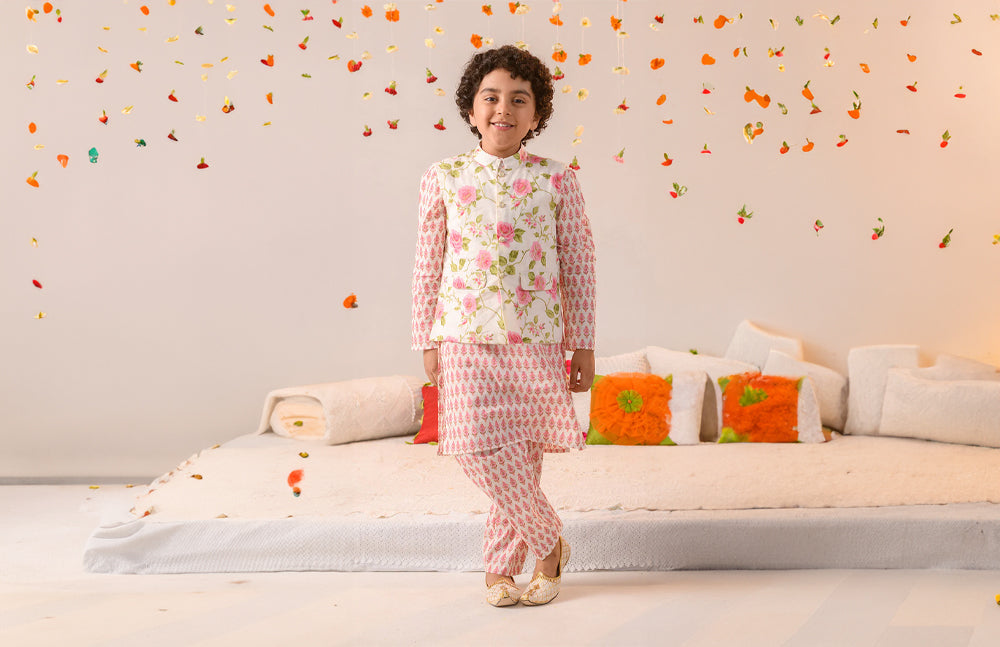
For boys kurta pajama sets, chest measurement is the priority. The kurta length should fall mid-thigh to just above the knee. Sleeves should end at the wrist with a slight bend in the arm. For dhoti sets, the waist measurement determines the dhoti fit. Most Pspeaches dhoti sets come with elasticated waistbands, which provide more flexibility, but check the waist measurement against the kids kurta size chart to ensure the elastic does not pull uncomfortably.
Girls Lehenga Choli, Sharara Sets, and Kurta Sets
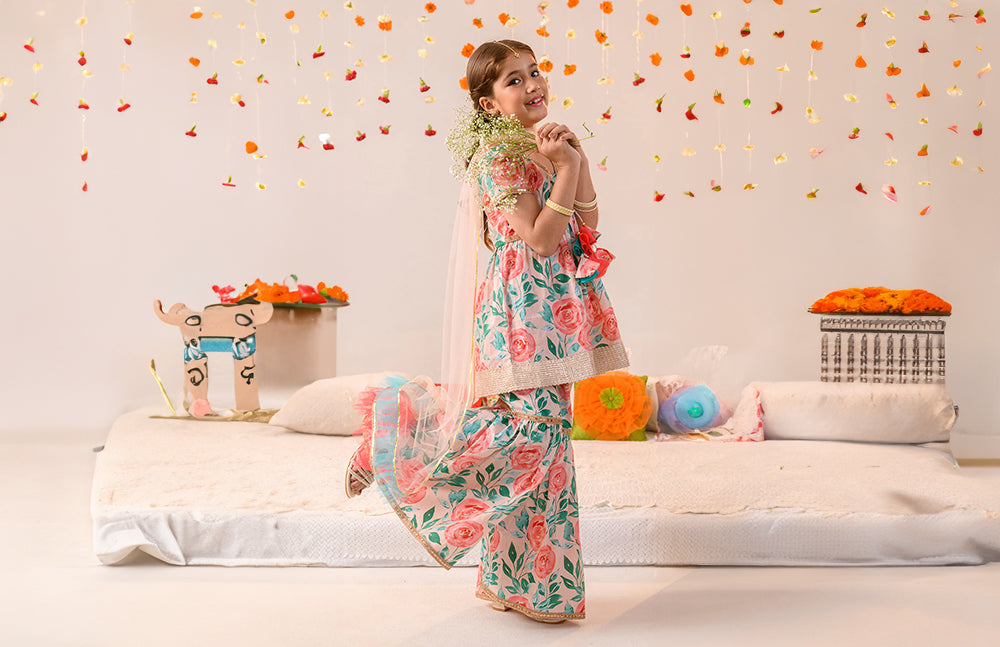
For lehenga for girls, the blouse fit around the chest is non-negotiable. A well-fitted blouse that sits comfortably without pulling at the back makes the entire outfit look polished. Take both chest and hip measurements, and if they suggest different sizes, prioritize the chest for the blouse and check if the lehenga skirt has enough gather or drawstring room to accommodate the hip measurement.
For sharara set for girls, hip and waist measurements are what matter most since the sharara has a wide leg and a fitted waistband. For kurta sets for girls, chest and overall length are the key checkpoints.
Infants: Baby Boy and Baby Girl Ethnic Wear
Age is even less reliable for infants since growth spurts are unpredictable. Use height and weight together. A 6-month-old on the taller side may need 9–12 month sizing. Look for outfits with expandable necklines, snap buttons, or elasticated waists since those features make dressing much easier and allow the outfit to fit across a slightly wider range of measurements.
Shop Kids Ethnic Wear at Pspeaches
At Pspeaches, every ethnic outfit is designed with two goals: your child should look incredible and feel completely comfortable. Our kids ethnic wear collection covers every occasion, from festive celebrations to wedding functions to casual family gatherings.
For Boys: Boys kurta pajama sets come in vibrant, trend-forward designs in comfortable fabrics. Structured enough for celebrations, easy enough for all-day wear. Our boys dhoti sets bring traditional drape with modern styling and elasticated waistbands that keep up with energetic kids.
For Girls: Our sharara set for girls features flowy silhouettes in festive fabrics that make girls feel dressed for royalty. Lehenga for girls at Pspeaches delivers classic elegance with fitted blouses and voluminous skirts, available across a wide size range. Girls kurta sets round out the collection with easy-to-wear, stylish silhouettes that work for both festive and casual occasions.
For Infants: Baby boy ethnic wear includes tiny kurtas, dhotis, and festive sets designed for ease of dressing with soft fabrics gentle on infant skin. Baby girl ethnic wear features adorable lehengas, frocks, and anarkalis with snap closures and expandable fits for growing babies.
Each product page on Pspeaches includes a detailed size chart specific to that style. Use it alongside your child's measurements for the most accurate fit.
Common Sizing Mistakes to Avoid
Ordering by age alone is the most common mistake parents make. Always refer to measurements. The second most common mistake is measuring over thick clothing, which adds false centimetres to every measurement. A third issue is not accounting for the specific outfit type: a number that works for a regular boys kurta pajama set might not work for a structured lehenga for girls blouse.
If your child is between sizes, the right call depends on the outfit. For structured tops and blouses, the smaller size often gives a cleaner look. For bottoms, skirts, and dhotis, the larger size allows better movement. When you cannot decide, contact the Pspeaches team directly for help picking the right size based on your child's exact measurements.
Conclusion
Getting the right size for kids ethnic wear is a skill that takes about five minutes to learn and saves hours of hassle. Measure chest, waist, hip, and height. Cross-reference those numbers against the kids kurta size chart. Factor in the specific outfit type. Size up when in between.
Pspeaches makes this process easier with detailed size guidance across every style in our collection. From baby girl ethnic wear to boys kurta pajama sets to lehenga for girls and sharara set for girls, every piece is designed to fit growing children well and keep them comfortable through every celebration. Shop the full kids ethnic wear collection at Pspeaches.
Frequently Asked Questions
1. What is the right age to use a kids kurta size chart?
Start using a measurement-based kids kurta size chart from the time your child is 1 year old. Age labels are only a rough guide since children at the same age can vary significantly in height and build. Always measure and match to the chart rather than relying on the age label alone.
2. How do I measure kids for ethnic wear at home?
Use a soft measuring tape and take four measurements: height (standing without shoes), chest (around the fullest part), waist (just above the belly button), and hip (around the widest part). Measure over light innerwear only. These four numbers are enough to find the right size across all types of kids ethnic wear.
3. Should I size up or size down for kids ethnic wear?
Size up when your child is between two sizes. Kids ethnic wear, especially lehenga for girls and structured kurtas, has less stretch than western clothing. A slightly larger size allows comfortable movement, while a smaller size may pull at the chest or restrict the arms during celebrations.
4. How do I choose the right size for a baby girl lehenga?
Use height and weight together rather than age alone. Look for styles with adjustable drawstrings at the waist and soft elasticated blouse backs. If your baby is between sizes, go with the larger one to ensure she stays comfortable throughout the event.
5. Is there a standard kids ethnic wear size chart in India?
There is no single universal size chart for kids ethnic wear in India. Different brands use different sizing conventions. The most reliable approach is to take your child's chest, waist, hip, and height measurements and match them to the specific size chart on the brand's product page. Pspeaches provides a detailed size chart on every product listing.
6. How often should I re-measure my child for ethnic wear?
Re-measure every three to four months for children under 5, and every six months for older children. Growth spurts are unpredictable, and a size that fit well in spring may be too small by Diwali. Taking fresh measurements before every major occasion purchase is the safest approach.