






Key Takeaways
- Matching sibling outfits work best when they coordinate rather than copy — same colour palette or print, different silhouettes for boy and girl.
- Cotton is the only fabric that makes sibling twinning outfits practical for full-day events — comfortable, washable, and available in festive prints.
- The five combinations below cover every major occasion — from formal weddings to Diwali pujas and school cultural programmes.
- Sibling clothing sets photograph exceptionally well — the coordinated look creates a visual anchor that makes family photographs genuinely memorable.
- Buy both pieces together and size up — sibling sets are designed to be worn together; sizing up ensures comfort through a long event.
There is something about matching sibling outfits at a family celebration that makes everyone stop and look. Two children coordinated in the same colour, the same print, or the same fabric — one in a kurta pyjama, one in a lehenga or kurta set — is one of those details that looks completely intentional and completely adorable at the same time.
The challenge is finding sibling outfits that actually work — where the boy's kurta and the girl's lehenga feel like they belong together without being identical, where the fabric is comfortable enough for a full day of wearing, and where both children look dressed up without looking stiff.
This guide covers five specific sibling clothing sets from Pspeaches' sibling collection — one for each major festival and wedding occasion — with styling notes, occasion guidance, and exactly what makes each combination work. Whether you are dressing siblings for a summer wedding, a Diwali puja, or a sangeet night, there is a combination here that fits.
Why Matching Sibling Outfits Work So Well at Indian Celebrations
Indian weddings and festivals are visual occasions. The decor is rich, the colours are layered, and the photographs are going to be looked at for decades. A coordinated sibling look adds a deliberate, thoughtful detail to the family photograph that stands out without requiring matching clothes head to toe.
The key distinction is coordination versus matching. Sibling twinning outfits in the Indian ethnic wear context almost never mean identical clothing — they mean the same colour story or print family, interpreted differently for a boy and a girl. A boy in a blue khaddi print kurta pyjama and a girl in a matching blue khaddi lehenga choli are clearly coordinated, clearly a pair, but each is wearing something appropriate to their own silhouette and comfort.
This approach also solves the practical problem of keeping two children comfortable through a long event. The boy is in a loose kurta pyjama he can run in; the girl is in a lehenga she can twirl in. Both are happy. Both are photographed. Everyone wins.
Must Read: Girls Sharara Set vs Lehenga Choli — Which Is Better for Your Little One and When?
1. Off-White and Pink Floral Foil — For Weddings and Receptions
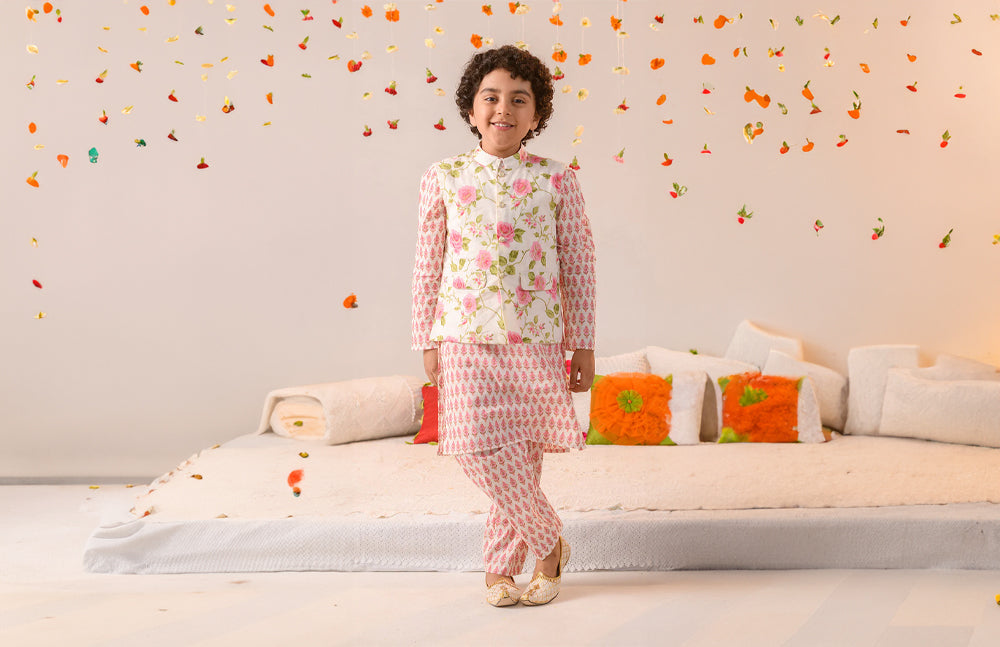
The combination: A soft off-white and pink floral foil print kurta pyjama with Nehru jacket for the boy, paired with an off-white and pink foil printed flared lehenga choli with dupatta for the girl.
This is the most formal sibling clothing set in this list — the foil print gives both outfits a festive sheen that reads occasion-ready without needing heavy embroidery. Off-white is a classic for Indian weddings, and the pink foil detailing ties the two outfits together visually while each piece works independently as its own complete look.
The Nehru jacket on the boy's kurta adds a layered, dressed-up finish that matches the formality of the girl's lehenga with dupatta. Both outfits are in pure cotton, which means they are comfortable enough for a full wedding day — morning function through to the evening reception.
Best for: Wedding ceremonies, receptions, engagement functions, formal family photographs.
Shop this look:
Boy

Girl

2. Blue and White Khaddi Print — For Daytime Functions and Mehendi
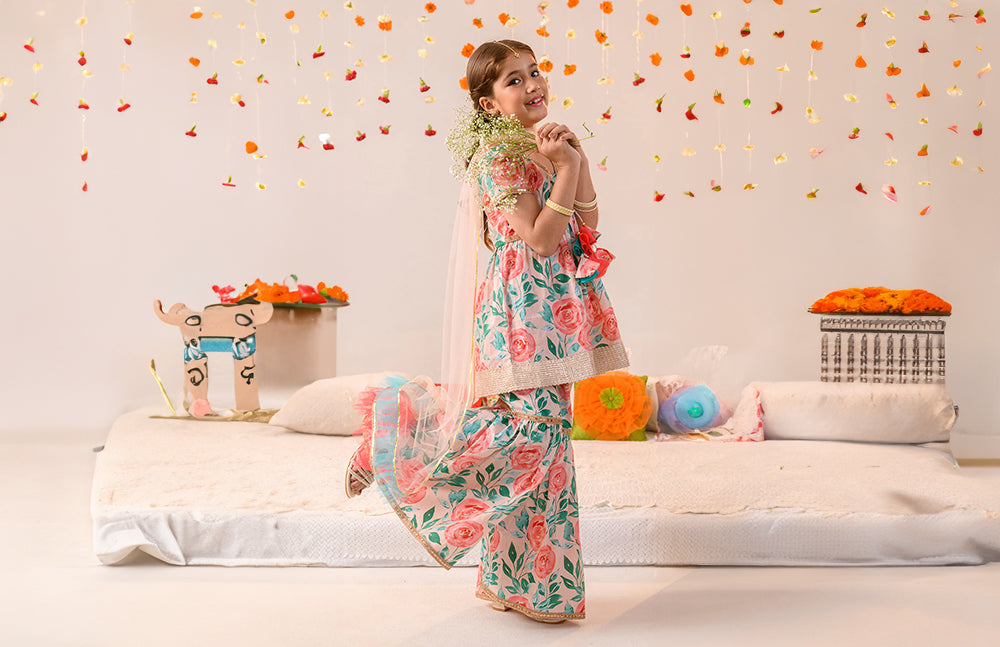
The combination: A blue and white printed pure cotton kurta pyjama with Nehru jacket for the boy, paired with a turquoise blue ethnic booti printed cotton circular lehenga choli with dupatta for the girl.
The khaddi print is one of the most recognisable traditional Indian textile patterns — it carries a handloom quality that looks genuine and considered rather than mass-produced. In blue and white, it is fresh, clean, and perfect for daytime outdoor functions where the light will show the print at its best.
The circular cut of the girl's lehenga gives it maximum flare when she moves or twirls — a detail that makes it an especially popular choice for younger girls who love the drama of a spinning skirt. Both pieces are in pure cotton, which makes this the ideal matching sibling outfits pick for summer weddings or outdoor mehendi functions where comfort in the heat is non-negotiable.
Best for: Mehendi functions, summer weddings, outdoor daytime events, Eid, school cultural programmes.
Shop this look:
Boy

Girl

Also Check: Cotton vs Silk vs Net — Which Fabric Is Best for Kids Ethnic Wear This Summer?
3. Purple Shibori — For Festivals and Casual Celebrations
The combination: A purple kurta pyjama set for the boy, paired with a dyed pure cotton kurti with trousers for the girl — both in a shibori-inspired dye pattern.
This combination takes a different approach from the more formal lehenga-based sets. The girl's outfit here is a kurti with trousers — a more relaxed, practical silhouette that suits younger girls or occasions where she needs to move freely without managing a full skirt. The shibori dye gives both outfits an artisanal, handcrafted quality that sets them apart from standard printed ethnic wear.
Purple is a strong festival colour — bold enough to stand out in photographs but traditional enough to fit any Indian celebration. This sibling twinning outfits combination is particularly well-suited to Navratri, Diwali, or Holi aftermath celebrations where the colour needs to pop and the outfit needs to survive an active day.
Best for: Navratri, Diwali, home pujas, casual family functions, younger children who need full movement.
Shop this look:
Boy

Girl

4. Lemon Yellow with Organza — For Spring Weddings and Haldi Functions
The combination: A lemon yellow kurta pyjama for the boy, paired with a yellow organza kali lehenga choli for the girl.
Yellow is the colour of Haldi, of spring, of Vasant Panchami, and of every celebration that happens when the weather is just turning warm. This sibling outfits combination is built for exactly those occasions — the lemon yellow is bright enough to read festive in outdoor daylight and soft enough not to overwhelm in indoor settings.
The organza kali lehenga for the girl adds a layer of texture and delicacy that elevates the look beyond a simple cotton set. Organza catches light differently from cotton or georgette — it has a subtle crispness that makes the lehenga hold its shape while still being light enough for warm-weather wear. The matching yellow on the boy's kurta pyjama ties the two outfits into a cohesive coordinated look that is hard to miss in a family photograph.
Best for: Haldi functions, spring weddings, Vasant Panchami, Diwali, outdoor daytime events.
Shop this look:
Boy

Girl

Must Read: How to Dress Your Infant for a Wedding — Ethnic Outfit Ideas for Baby Boys & Girls
5. Bangalori Green with Multi Crinkle — For Sangeet Nights and Evening Functions
The combination: A Bangalori green kurta pyjama for the boy, paired with a green multi crinkle lehenga choli for the girl.
Green is one of the most underused colours in kids ethnic wear, which is exactly what makes it so striking when it is done well. This combination leans into a deep, rich green — the kind that photographs beautifully under both natural light and evening function lighting. The Bangalori fabric on the boy's kurta has a subtle sheen that reads festive, and the crinkle texture on the girl's lehenga adds movement and visual interest without embellishment.
This is the matching sibling outfits combination to reach for when the occasion is an evening function — a sangeet night, a reception, or a formal dinner celebration. The richness of the green, the texture of the crinkle, and the clean silhouette of the boy's kurta combine into a look that stands out in a room full of more conventional pinks and reds.
Best for: Sangeet nights, evening receptions, formal family dinners, Teej, Karva Chauth family functions.
Shop this look:
Boy

Girl

How to Choose the Right Sibling Set for Your Occasion
With five strong options on the table, here is a quick way to narrow down based on what you actually need:
For a formal wedding or reception: Go with the off-white and pink foil combination (Set 1). The Nehru jacket and foil print read the most formal of the five and will hold up well in a full wedding photograph.
For a summer daytime function: The blue khaddi set (Set 2) is the strongest pick. Pure cotton in both pieces, a fresh colour palette, and the circular lehenga gives the girl's outfit excellent movement for an active day outdoors.
For a festival at home: The purple shibori set (Set 3) or the lemon yellow set (Set 4) both work well here. The shibori is more relaxed; the yellow is more festive. Choose based on the specific festival — purple for Navratri, yellow for Haldi or Diwali.
For an evening function: The Bangalori green set (Set 5) was made for this occasion. The richer fabric and deeper colour work far better under evening lighting than a pastel or printed cotton would.
Getting the Sizing Right for Sibling Clothing Sets
Sizing sibling clothing sets requires one additional step that single-outfit purchases do not — you need to size both children correctly relative to each other, so the coordinated look actually reads as coordinated and not as two children in vaguely similar colours.
Size up for both children. Ethnic wear in general runs slightly fitted, and the additional room allows better airflow and more comfortable movement through a long event. A slightly large kurta on a boy looks perfectly fine; a slightly large lehenga on a girl just means a more generous skirt flare.
Do not size them to be identical. A three-year-old girl and a seven-year-old boy are going to be in very different sizes — and that is fine. The coordination comes from the colour and print matching, not from the physical size of the garments being similar.
Check age versus measurement. Kids grow at different rates. Always cross-check the chest measurement and height against the brand's size chart rather than assuming age-based sizing will be accurate for both children at the same time.
Buy at the same time. If you are buying the boy's kurta and the girl's lehenga separately, buy them together in a single order. Dye lots can vary between batches, and buying together ensures the colours actually match when the pieces arrive.
Styling Tips for Sibling Twinning Outfits
Keep accessories coordinated, not identical. A girl in a foil print lehenga might wear small jhumkas and a braid with pins; a boy in the matching kurta pyjama might wear a matching pocket square in the Nehru jacket. The coordination is subtle but visible in photographs.
Footwear matters more than people expect. Matching mojris or juttis in a complementary colour for both children ties the look together from the ground up. It is a small detail that photographs extremely well.
Plan for the dupatta. For younger girls in the sibling set, pin the dupatta lightly to the shoulder of the lehenga blouse rather than leaving it loose. It stays in place through the event, stays out of the food, and stays visible in photographs rather than ending up bundled somewhere.
Take the coordinated photograph early. The first thirty minutes of any Indian function are when both children are freshest, most cooperative, and most likely to still be in perfect outfit condition. Get the sibling photograph done early before someone finds something to spill.
Conclusion
Matching sibling outfits at a wedding or festival are one of those details that look effortless but require a little thought to get right. The right combination is not about finding identical clothes — it is about finding pieces that share a colour story or print family, are made from fabrics both children can actually wear comfortably, and suit the specific occasion you are dressing them for.
The five combinations above cover the full range — from the most formal wedding reception to a relaxed festival puja — and every one of them is built on pure cotton or considered fabric choices that put the children's comfort first. Browse the full sibling set collection at Pspeaches to find the right coordinated look for your next celebration.
Frequently Asked Questions
1. What are matching sibling outfits for Indian weddings?
Matching sibling outfits for Indian weddings are coordinated ethnic wear sets where a boy and girl wear outfits in the same colour palette or print — typically a kurta pyjama for the boy and a lehenga choli or kurta set for the girl. The outfits are designed to look like a pair in photographs without being identical.
2. What fabric is best for sibling twinning outfits at a summer wedding?
Pure cotton is the best fabric for sibling twinning outfits at a summer wedding. It is breathable, comfortable for both children across a long event, and available in festive prints and colours. Cotton-blend and georgette are also good choices for evening functions.
3. How do I choose the right sibling clothing set for my children's age gap?
Choose the colour and print combination based on the occasion, then size each child independently using chest and height measurements rather than age-based sizing. The coordination comes from the matching fabric or print — not from the sizes being similar.
4. Can sibling outfits work for both boys and girls of different ages?
Yes — sibling outfits in coordinating colours work across any age gap because the boy and girl are wearing different silhouettes anyway. A toddler girl in a circular lehenga and a seven-year-old boy in a matching kurta pyjama both look coordinated despite the significant size difference.
5. What occasions are matching sibling outfits best for?
Matching sibling outfits work for any Indian celebration — weddings, receptions, mehendi, sangeet, Diwali, Navratri, Haldi, Eid, naming ceremonies, and school cultural programmes. The choice of colour and fabric should be guided by the formality and timing of the specific function.
6. Where can I buy coordinated sibling ethnic wear in India?
Pspeaches has a dedicated sibling set collection with coordinated boy-girl combinations in matching prints and colour palettes — designed specifically to be worn together for festivals and weddings.
Shop the full range of matching sibling outfits at Pspeaches — coordinated ethnic wear for brothers and sisters, built for real celebrations.